Interview - The Howlers
As always happens at the start of a new calendar year, a clutch of bands come to the fore fighting for attention. Dark garage rock is on the rise, and there are a host of acts flying the flag.
The latest members of this pantheon are naught more than embryos in the music scene; drummer Cameron Black joined his university colleagues Adam Young (vocals, guitar) and Gus Ter Braak (bass) in the late summer of 2018 and together the trio, rising like a phoenix from the ashes of their former moniker Scrubs, have become The Howlers.
As part of Independent Venue Week, the trio put the cap on an impressive week having supported indie mainstays The Rifles at a sold-out Borderline in the heart of London by going west for their own headline show at Bristol’s The Lanes. I caught up with the band before this show to hear all about their recent past and burgeoning future.
So you guys have had a good week!
Adam: Sort of yeah. I was ill towards the beginning of the week, so we had to cancel our headline gig in London. But we had The Rifles at the Borderline which was sold out, so that was cool.
And how were the gigs?
Cam: The Borderline was great, really really good. Good sound and stuff. We were a bit off. It felt sloppy for me.
Adam: It was sloppy, but that gig was a highlight. BBC Introducing for the area said it was a highlight of the festival. There was a magazine reviewing the festival that said our set was a highlight. Even though we were sloppy, even when we’re shit we’re good. It was packed anyway.
So, how did you meet?
Adam: We met in London.
Cam: Me and Adam met in 2015 when we went to uni. We kind of fucked about for a year or two.
Adam: We were just taking Libertines songs and re-writing them.
Gus: We fucked about for two years without a drummer, and our housemate played bass for a while and I was playing drums. We started the band with a guy called Sam, then after half a year we got Cam in. We did the first EP with Sam, and we got Cam in about five months ago.
Adam: We all bonded over different interests. Me and Gus like the 00s indie stuff. Me and Cam bonded over Afrofunk, and those two bonded over Led Zeppelin and stuff. So we all bonded with each other. We all like pretty much the same stuff, but that is the stuff we grew up listening to. And it just so happens that’s the stuff that we have the most inroads to.
When we walked onstage and supported The Rifles…the fans have never heard anything like us so we’ve got to be…it takes a lot of balls to do. Most gigs aren’t scary, but when you’re walking out on stage to a crowd who you know are loyal to their band, you have to be unbelievably good to turn them. It is a bit daunting but I think we’ve found our groove.
You were called Scrubs initially. Why the name change?
Adam: There’s a couple of reasons as to why we chose that name at the time. But me and Gus were living right by Wormwood Scrubs prison, so that was why we picked it. Then we moved and brought Cam in, so it felt like a rebirth, and that we needed a new name.
Adam: We had that name before we wrote these tunes. That name sort of carried on while we wrote these tunes, but it was sort of wearing thin. Every night I’d have to say it and it just felt horrible.
So why The Howlers?
Adam: We moved out to East London and there’s a pub around the corner called Howling At The Moon.
Gus: It’s where Arctic Monkeys recorded the ‘Why’d You Only Call Me When You’re High’ video.
Adam: We only realised when we were drinking there, there’s a big photo of Alex Turner in the bathroom. We debated it (the name) pissed in the corridor next to the toilet. It came from that. These boys weren’t 100% on it for ages, but it’s grown on them.
What are you trying to achieve with the music?
Adam: Ourselves, the Blinders and the Wytches are a genre that is being formed, or given a re-birth, the garage surf sound, but is combined with darker themes. But we’re not political. Us and the Blinders both pay homage to the Wytches in a sense of where we take some influences from, but we’ve both gone our separate ways. Our songs are open to interpretation. I write the lyrics, but I write them in a way where I have a thing in mind. But then once it all comes together, that thing could be about something else.
Cam: Look at Fat White Family, for instance. They are very staunch, brilliant lyrics and political view. But they’re disgusting, and they write about whatever they want to write about. They don’t put all their eggs in that one basket. Not to say the Blinders do, that is their message and we respect that.
On that, how does the songwriting work?
Adam: I wheel a skeleton into a room and say ‘put some meat on that.’ I’ll have an intro riff, an idea of how the lyrics are going to go, but I don’t know anything drums. I know a little bit about bass but he (Gus) always changes it anyway so it doesn’t matter.
What’s the plan this year?
Gus: We’ve recorded six songs. It’s probably going to be singles. We do want to do singles. You do an EP, it’s four songs, but you do want a single.
Cam: We’ve got a lot of plans. We’ve finished off the tour. We’ve done a lot of shows since I joined the band. My first gig we played to about two people, then ten gigs later we played at the O2 Academy in Birmingham. The Nottingham gig at Rock City at the end of February is going to be our biggest show yet, and our biggest crowd.
Where are you hoping to be in 12 months’ time?
Gus: Fyre Festival headliners! If we release new tunes, we’ve got some PR stuff behind us. Hopefully it’ll get to radio and to bigger audiences.
Adam: We’ve signed to a Sheffield label called These Bloody Thieves. They absolutely love what we’re doing. In the studio we did a b-side, one take. It’s something that’s been knocking about for a long time. He’s always liked it. That was half-finished the day before we went into the studio.
Adam: We’ve got a few gigs lined up, in terms of possible festivals. We’re doing Thousand Island in London and Camden Rocks, which is a massive festival. We hope that people like it, and we’re pretty sure that people will.
You can’t control what people think, all you can do is keep playing.
The Specials - Encore

This shouldn’t be happening.
It’s indicative of where Blighty is right now, both musically and socially, that this album has not only been made (the first album from this version of the Specials in forty years) but also that it’s depressingly relevant.
A quick recap: The Specials shot to fame in the late 1970s with a string of Top 10 singles. Their ska sound was revivalist, but the content wasn’t. Social commentary was the order of the day against a backdrop of urban decay and violence in the inner cities, most famously detailed on their 1981 UK number one single ‘Ghost Town’. From there they became something of a revolving door for members, to an extent that you’d need a flow chart to keep track of it. They span off into various collectives but always maintained a key message of equality and, most especially, anti-racism.
They’ve been ‘back’ for a good while now, but Encore is their first album of new material in that time. Sadly, in the age of Brexit, austerity and Black Lives Matter, they and their message have never been more prescient and vital.
Although a cover (the original by the Equals back in 1973), opener ‘Black Skinned Blue Eyed Boys’ is their manifesto; ‘The world will be half breed’, they sing against a disco funk that Chic would be proud of. Hammering home the message, ‘B.L.M.’ (see above) is a desperate tale of one Jamaican man (guitarist Lynval Golding) orating his experiences of discrimination from being a Windrush passenger to strolling around contemporary America. Lead single ‘Vote For Me’ pulls from their past most obviously; the haunting trumpet echoing ‘Ghost Town’ as Terry Hall laments the dire state and short-termism of modern British politics. ‘The Lunatics’ is another diatribe against those in power, they having unsurprisingly ‘taken over the asylum’. It’s not hard to see who he’s referring to. (Hint: he lives in a white house.)
By now you’ve got the gist; ‘Breaking Point’ is an ooompa-loompa tread around where we are as a western society, with all the pressures we work within. ‘Embarrassed By You’ is a scathing condemnation of the more confidently certain characters that walk our streets and occupy our screens. ‘Blam Blam Fever’ takes a more light-hearted tack on rising gun crime. Best of all is ‘10 Commandments’, with vocals from Saffiyah Khan, the young woman who was famously photographed standing up to a member of the EDL. It puts you in her shoes and is unforgiving but enlightening.
If this all sounds a bit intense, fear not. Musically the Coventry mob are perhaps more jaunty than they’ve ever been, their traditional ska sound given a rhythmic bounce which is held together by some outstanding bass work. Closer ‘We Sell Hope’ is more reggae than ska and accentuates the band’s strength as more than a one trick pony, a slower beat requiring much more discipline. ‘We’ve got to take care of each other’ as a closing salvo complements the opening track perfectly.
There’s an argument to be made that their peers four decades ago were Madness and The Jam, in musical style and lyrics respectively. Paul Weller no longer sings the songs of the suburbs, and Madness do what they always do. Probably due to their own internal diversity, The Specials were always more intent on railing against the wrongs of life. It’s no different on Encore, and once peace is made with the sound of men in their 50s railing against the inequalities of life, you’re left bewildered as to why they should still be doing it.
We’ve never needed them more, but to be listening to music of this quality is some consolation.
Panda Bear - Buoys

Unusually Noah Lennox’s solo career hasn’t followed the traditional path – the one usually consisting of a key member of a hugely successful band (Thom Yorke), a mid-tier one (Kele Okereke) or a not-so-successful one (Miles Kane) breaking away to either completely sever ties with the former group or have the two projects work in conjunction.
As is his way, it’s a variation of a well-told tale.
Lennox has been operating under the moniker of Panda Bear for over two decades, releasing his self-titled debut album back in 1999. Although like most self-released debuts it was an unassuming, lo-fi effort that didn’t make huge waves, it was a key first step in his story. Shortly afterwards, he collaborated with Avey Tare for an album that was retroactively classed as the first for Animal Collective.
Since then, such is the free-following nature of the collective, the lines have become blurred as to what constitutes solo albums and what constitutes band projects; although he hasn’t left the group, last year’s Tangerine Reef marked Animal Collective’s first album without Lennox. Although he hasn’t left. Clear?
During his solo career Lennox has released a number of albums, the most notable of which, 2007’s Person Pitch, was met with critical acclaim and subsequently a permanent slot on ‘Influenced By…’ lists. Two more albums and three EPs of the by now trademark psychedelic electronic pop have followed. In contrast, for this sixth offering, Lennox has stripped away the swirl of effects and broken the sound down to guitar, bass and vocals, with some textured samples liberally sprinkled across its 31 minutes.
Opening with recent single ‘Dolphin’, the sparseness sets a precedent. Lennox’s vocals seem to have gone backwards through the hedge that is Auto-Tune, backed by only a gentle acoustic and a rather irritating water dripping sound. Several other background noises pop up at various points, the most notable being a female crying on Inner Monologue, all lending themselves to make the album both intimate and alien.
Initially sounding quite congested, Buoys rewards after multiple lessons, revealing itself it to be dub-like in its atmosphere, being more about evoking feelings and thoughts rather than amazing with its dexterity. It’s mid-paced, enabling the album to flow together well, each song following the tone of its predecessor but adjusting the emotional course ever so slightly.
The gentle, spindly acoustic guitar sound is the only permanent setting across the nine songs, so tonally it’s more of a piece than an album. Indeed, Lennox himself admits he was looking to find a single vocal take and then add Auto-Tune effects afterwards. It’s melodically straight-forward, although every now and again something stands out, the highlight being the gorgeous chorus on Token.
Thematically and lyrically, in his own obtuse way Lennox is addressing the present-day climate and the problems younger generations will inherit. The title is a metaphor for human emotion, being both the definition of humanity but also ever so slightly repressed, floating primarily beneath the surface.
Panda Bear has opened another insight into his soul. He’s left us no clearer, but emotionally fulfilled.
White Lies - Five

Terrifyingly, it’s been ten years since White Lies found success with their fine debut album To Lose My Life. Building on the doom-laden post-punk of the 2000s, which had been spearheaded by Interpol and given a twist in the UK by Editors, it managed to be both anthemic and maudlin.
Although seemingly a bit late to the party, the Ealing trio found an impressive level of success following the number one album with good mid-afternoon slots at various festivals during the turn of the decade. In truth, it was always a bit incongruous to see frontman Harry McVeigh whip crowds into a frenzy by encouraging them to sing along to lyrics such as ‘this fear’s got a hold on me’, but it did the job.
Since then, as is so often the case, it’s been the law of diminishing returns. Second album Ritual was cut from the same cloth as its predecessor, but more lumpen. The brave BIG TV (a concept album) in 2013 and the hesitant Friends of 2016 did little but consolidate their standing. So where next? To quote another noughties act, back to the start.
The cunningly titled Five brings all the ingredients of their once-successful recipe to the boil, with some new garnishes for good measure. It’s book-ended in epic fashion; opener ‘Time To Give’ is a good simile for their career to date – after a solid start, four minutes in the mid-section is a seemingly endless circle of synths that ascends through the keys before coming back on itself. Just when you think it can’t go any further, it does. And then it does it again. It’s an ambitious, albeit repetitive, start. Half an hour later, closer ‘Fire And Wings’ is built around a gentle but striking use of two chords, slow paced but grandiose in tone.
The rest of the album covers recognisable bases both sonically and lyrically. Harry McVeigh’s theme is a focus on the human condition and it’s most evident on ‘Finish Line’, which is an outsider’s look at the last days of a relationship backed by some overlaid synths and their trademark chunky guitars (think ‘Death’ from the first album). Although they’re heavily reliant on the glacial sounds of the synth, acoustic guitars do crop up on a couple of occasions throughout, giving proceedings a more organic and human feel than before.
However, one thing that hasn’t changed is McVeigh’s delivery. Only once does he deviate from his comfortable pitch, attempting falsetto on ‘Finish Line’, and the (self-inflicted?) vocal limitations make it quite hard to differentiate between the songs. Dramatic as always, it engenders little emotional connection beyond that. Perhaps that’s intentional, to encourage us to listen elsewhere; ‘Kick Me’ has some good axe work, particularly during the solo, while ‘Denial’’s guitar is sky-scraping. Jo is so fast paced it almost can’t keep up with itself, a slice of pure 1980s that echoes (sorry) the Bunnymen. Best of the lot is ‘Tokyo’, all juddering disco bass and chamber filling vocals. It’s a synth strut and stands alongside any of their best singles.
By not trying too hard, White Lies have managed to release themselves from the shackles of their successful but increasingly distant past to make an album that, ironically, comes closest to the high level of their debut.
Pavo Pavo - Mystery Hour

Back in 2008 MGMT were figureheads for ‘dream pop’, a brand of wistful offerings with breathless or distant vocals which added to an air of melancholia, alchemised by synth-driven, washed out arrangements with enough guitars to satisfy the polemic factions of ‘pop’ and ‘indie’.
Inevitably, and predictably, many followed in their wake, including Empire Of The Sun and Niki & The Dove, Tame Impala being the current kings of the playground. Often the music of dream pop is so effect-driven that the lyrics get either lost in the mix or are frankly of secondary importance. At surface level, Pavo Pavo’s sophomore effort is made up of similar stuff. But context is everything.
Ostensibly a five-piece but creatively a duo, the Brooklyn outfit’s debut album Young Narrator In The Breakers was released back in 2016 to a positive response. Oliver Hill and Eliza Bagg are the key driving force of the band and were dating for some time but fragmented as a couple at some point after the release of the first album. Rather than let that affect the band, it galvanized Hill into writing the bulk of Mystery Hour. It surely takes some strength of character to be in the vicinity of an ex, let alone work with them. To then lay bare your emotions for said ex, then the band and then the wider world to see, is inspiring. It’s been done before of course (it’s still nothing compared to the gestation of Fleetwood Mac’s Rumours) but it’s no less remarkable.
Not only that, but there is little moroseness here. Whilst lyrically rooted in pure human emotion with no punches being spared (the near-opening salvo of ‘I realise love is to see every side of you, but mon cheri, I’m designed to be unsatisfied’ is particularly poignant and sets the tone), musically the album’s eclecticism rarely channels anything but joy. The first song and title-track is awash with luscious strings and choir, then in immediate contrast Mon Cheri channels the grinding guitars of David Bowie’s ‘Fashion’, even including some superfluous but welcome ‘beep beeps’.
Easy dials back to wistfulness due to Bagg’s vocals, backed by sturdy drumming that’s out of kilter with the vibe of the song yet compliments it at the same time. ‘100 Years’ initially could be White Album-era Lennon: ‘such a f***ed up outcome when you’re near me’ Hill laments, before Bagg’s floating soprano skills (she actually is one) take over for the Byrdsy chorus, then winding guitars take centre stage as all elements clash. The highlight of the album, it’s a mini odyssey that’s over in three minutes but feels like twenty. Meanwhile, ‘Close To Your Ego’ is built around wobbling bass and depression-crunching guitar, and if stripped of Bagg’s by-now distinctive voice would sit comfortably on any of Unknown Mortal Orchestra’s albums.
‘Around Part 1’ is a gentle yet urgent stomper, 1920s music hall keys taking stage before seguing into ‘Part 2’, a woozy slice of anxious choir and distorted vocals-driven confusion. The pace slows right down for the final two tracks; ‘Statue Is A Man Inside’ and the sparse ‘Goldenrod’ are two sides of the same coin; the former defiant and the latter reflective in both tone and lyrics.
Both widescreen yet succinct, Mystery Hour is a record that encapsulates the intricacies and intimacies of a relationship as well as any that has come before. Managing to channel both joy and despair, as only being in love can do, it’s a bittersweet beauty that rewards multiple listens.
Acknowledging the befuddlement of one’s subconscious, it’s the most accurate representation of dream pop yet realised.
Ride - Live at The Trinity Centre, Bristol
Since their reformation in late 2014, Ride have been ubiquitous.
Firstly there was a tour in 2015 to reacquaint themselves with the songs and their audience. Then, in 2017, they released the wonderful Weather Diaries, an album which managed to update their atmospheric soundscapes with the songwriting skills Andy Bell had only improved during his time working with Noel Gallagher and Oasis.
There followed another tour, an EP and a remix album, both released earlier this year. Possibly saving the best for last, this show is one of a handful of special acoustic shows celebrating their 30th anniversary.
A cynical soul would say they are milking it, but it’s more accurate to say the Oxford quartet are making up for lost time. At first glance an acoustic set seems a brave move; so definitive and recognisable is their own unique wall of sound, would stripping away the bombast reveal the band’s strength to be in the noise they make rather than the songs they write?
Not a bit of it. In actual fact it has the opposite effect; these songs have stood the test of time. From the sense of melancholy on ‘Howard Hughes’ to the brief blast of joy served up by ‘Taste’, each number perfectly reflects the tone of the night; intimate, reverential yet celebratory.
Last year’s ‘Lannoy Point’ sets the tone with its intricate, almost flamenco guitar as Bell and Mark Gardener trade vocals with Steve Quaralt’s blunt, lesser-spotted acoustic bass holding things together. ‘Weather Diaries’ (the song) throbs along in its hypnotic beauty while ‘From Time To Time’ becomes a thing of wistful wonder.
The gig also highlights what a good guitarist Andy Bell is, and how strange it was that he was happy to be on bass duties during his time with Oasis. He clearly runs the show, and comparing his driving guitar on ‘Lateral Alice’ to the dexterity he demonstrates on the aforementioned ‘Weather Diaries’ flags up an unheralded talent.
He’s ably supported by his old friends: Mark Gardener is all smiles, toe-tapping whenever Bell takes lead vocals, and embracing with smiles when he’s called on to perform his day job as lead vocalist. When the band cover R.E.M.’s ‘The One I Love’ to a rapturous reception, his glee at being Michael Stipe for a few seconds is matched only by the uncanniness of his impression. Quaralt and drummer Loz Colbert obviously have less to do than normal, but keep their percussion simple and effective.
At times the gig is almost ethereal. More so than many of the others, ‘Drive Blind’ is a guitar-based song that shouldn’t work so well acoustically but does. It’s too early to ascertain newbie ‘Shadows Beyond The Sun’’s suitability to this environment, but it sits well alongside the behemoths surrounding it. In the encore, the sublime ‘Vapour Trail’ is matched only by closing number ‘Leave Them All Behind’, wisely edited but losing none of its power. 18 songs pass by in the blink of an eye.
One of the reasons Beady Eye parted ways in late 2014 was due to Andy Bell’s desire to reform Ride. Gem Archer and Chris Sharrock re-joined big brother, while Jay Mehler became part of Liam’s touring entourage.
Ride are unlikely to be playing any huge shows, but creatively they are at their most rewarding and, after fifteen years in the shadow of the Gallaghers, Bell, together with his old friends, certainly isn’t coasting.
Black Grape - Live at The O2 Academy, Bristol
As your correspondent was waiting outside the venue, he saw a middle-aged man having a conversation with the door-staff.
The conversation went on for a while, with the man eventually entering the building from a different entrance around the back. This was at 8.50pm; the main act was due on stage at 9pm. Half an hour later, when the band finally made their appearance in front of an intimate crowd, the same man took pole position onstage.
The man in question was Kermit, co-lead vocalist of Shaun Ryder’s Black Grape (to give them their full name) – in the age of careerist professional rock stars, Ryder’s outfit clearly still fly the flag for living life in a different lane.
For all his unique talents, Ryder has never had the most textured of vocal styles, and age has done little to change this approach. He barks into the microphone, his left-field lyrics sadly incomprehensible. Dressed in black and wearing a cap, he looks more like he should have earlier been refusing his bandmate entry to the venue. Hands constantly in pockets, only shifting stance to puff on a vape, he’s one of the most incongruous living legends in music today. As ever with him, it’s about attitude above all else.
Had the door-staff seen any of the gig, they would surely have held their heads in shame as Kermit does virtually all of the heavy lifting, i.e. singing. His joyous cries fill the room for opener ‘In The Name Of The Father’, and he sustains his revelry throughout the entire show. No Bez, Kermit is ostensibly the frontman, drowning Ryder out for most of the set, specifically during the venomous delivery of ‘Nine Lives’. Midway through, he opens a bottle of red wine and swigs from it readily, a man happy with his lot in life.
All that said, this is very much a double-act. At times it borders on cabaret, with cheesy introductions (‘I’ve lived a good life Shaun’…’Not surprised Kermit, you’ve got ‘Nine Lives’’), Ryder not even trying to disguise his lack of preparation; he rarely looks up as he’s too focussed on the setlist and lyrics printed on the floor. But the contrast works well.
With such dominance and emphasis on the front two, the rest of the band are side-lined, yet there’s excellent musicianship on display; the wah-wah funk of ‘Shame’ and the dexterous Revolver-esque solo on ‘Set The Grass On Fire’ are poles apart but delivered with equal gusto.
All three components (Ryder, Kermit and band) come together for ‘Reverend Black Grape’, here with added ‘Sympathy For The Devil’ ‘wooh woohs’ over a pace-quickening outro. Being their best song, it’s unsurprisingly the highlight of the night, its odd placing mid-set meaning everything that follows pales in comparison. Which is a shame, as several of the slices from last year’s fine album Pop Voodoo deserve better.
Shaun Ryder freely admits that he’s juggling tours with both Black Grape and Happy Mondays for financial purposes but, judged purely on tonight’s (November 29th) showing, long may this particular motley crew be at odds with the establishment.
Slaves - Live at The O2 Academy, Bristol
If you had to pick some warm-up music for Kent’s finest, the positively veteran punk rockers Slaves, then it’s a reasonable assumption that pop ‘classics’ from twenty years ago wouldn’t be your first port of call.
Yet the sight of the testosterone fuelled crowd going nuts for the Weather Girls’ ‘It’s Raining Men’ sets the tone for the night (November 20th); passionate but dripping with irony.
Opening with their now infamous cover of Skepta’s ‘Shutdown’, said crowd take things up a gear. For follow-up ‘Sockets’ the venue is literally shaking, virtually all 2000 punters rocking all floors of the building. In their relatively short career, the twosome have built up a fiercely loyal crowd and singer/drummer Isaac Holman has them eating out the palm of his hand for the entire set.
A born showman, any request for the crowd to sing is taken up with relish. He regales the crowd with a tale of when the band first started out and questions were asked about their somewhat limited instrumentation, leading to a chant-then-performance of ‘Fuck The Hi-Hat’. Minutes later, he encourages hugs all round, insisting that even security hug some people from the front row, and then proceeds to pull two fans up on to the stage to dance during ‘Cut And Run’. Later still, before a fully acoustic version of ‘Photo Opportunity’, Holman demands that the crowd not reach for their camera phones, even going so far as to call someone out for doing just that during the course of the song.
Having such a charmer fronting the band is a vital weapon in their arsenal. Consisting only of Holman and partner in crime Laurie Vincent covering the length and breadth of the stage armed only with guitar, chords and volume, what they are able to do with such a limited amount of tricks is impressive.
But most of the tricks aren’t necessary; Slaves’ sound is one of such brutal power that it overwhelms their stage presence; ‘Sugar Coated Bitter Truth’ is replicated in all its fuzzy electric glory, and the out-and-out punk blast of ‘Where’s Your Car Debbie?’ manages to both reiterate their principles and show us how far they have come. The newer cuts from Acts Of Fear And Love have more intricate melodies and are generally more polished than what went before, but without losing the vitality, ‘Chokehold’ being the best example of their new anthemic offerings.
Their USP has its limitations, and having played the game for a while now the boys know not to overdo it. Each song is a punch to the gut, without once going into wig-out territory. It’s an excellent example of restraint and control. It’s quite a short gig, the duo only playing for around an hour but, given the effort they put in (Holman in particular is something of an iron man), very few could leave the gig feeling short-changed.
It’s a perfectly judged visceral punk odyssey.
Gruff Rhys - Live at SWX, Bristol
If Gruff Rhys isn’t careful, he’ll soon be a national treasure.
The very notion would probably repel the Super Furry Animals frontman. Both his band and the man himself have always been more comfortable operating on the outskirts; when they tasted a bit of mainstream success back in the 90s, rather than smarten up their appearance by wearing more expensive clothes or playing the media game, our heroes as usual subverted expectations by dressing up as Yetis.
And so the subversion continues into Rhys’ solo career. Entering the stage to a knowingly butchered version of the 2001: A Space Odyssey theme, we are all cordially invited to visit Babelsberg. With six albums under his belt, his own catalogue is nearly as extensive as his group’s, but the focus for tonight’s (November 12th) first half is his latest effort.
Usually an album is played in full for a celebration (and accompanying reissue) but, contradictory as ever, Rhys plays the album in full, the wistful feel of the record perfectly soundtracking the melancholy of a Monday night. It translates well to the live arena too; ;’Oh Dear!’ races along, ‘The Club’’s melodrama is given more time to breath and the flute section of ‘Drones In The City’ echoes around SWX. Testament to the musicianship, it’s a faithful rendition of the album.
His whole demeanour and canon up to this point can put him alongside Billy Bragg as one of the UK’s greatest living troubadours, but with his onstage patter he’s more of a wry comedian, using dour Welsh wit to gently rib the host city (‘we recorded in Bristol a couple of years ago, it was miserable’) or asserting his presence as the reason we’re out (‘this is called ‘Take That Call’, please don’t.’). He has the crowd’s attention for the whole show, continuing his old trick of utilising placards encouraging ‘a ripple of mild applause’ or similar. Rhys makes the gig feel intimate despite the hundreds in attendance. Best of all is when he stops ‘Negative Vibes’ then encourages the crowd to count in a perfect restart; old performance tricks with a twist, as ever.
There are few concessions to his parent band, with only b-side ‘Colonise The Moon’ given an airing. The performance of the song is set against a backdrop stating ‘Brexit Is A Bad Sax Solo’ – of course, an initially bad sax solo is dutifully provided, before morphing into a more mournful sojourn. The rest of the set spans all his albums and serves as a reminder of the raw talent at work. As per usual, there are ventures into his native tongue but for those of us who don’t speak Welsh it matters not, as ‘Gwn Mi Wn’ and ‘Gyrru Gyrru Gyrru’ are little more than steady driving chants.
With no semblance of ego, Rhys gives his band free rein and it’s a collaborative outfit. One suspects that Rhys would be happy to fade into the shadows and let the band take over were it not for having to supply the vocals which are, as ever, soothing and heart felt.
A perfect way to ease into the week.
Parquet Courts - Live at SWX, Bristol
There’s a certain requirement for bands gigging on a Saturday night, namely that it should suit the occasion, be uplifting and essentially soundtrack the party that the punters will be having.
The crowd will have likely made an early start because they can, and are normally pretty well oiled by the time the band take to the stage. On November 10th in Bristol, Parquet Courts stepped up to the plate with relish.
The Texans are somewhat riding the crest of a wave at present; they’ve built up a strong cult following since releasing their first album American Specialities in 2011, but are in the process of crossing over following the success of this year’s Wide Awake!, with huge exposure on various indie radio outlets.
It’s a packed and punchy gig. The band are on for little more than an hour but cram the set, performing with no backdrop to speak of, instead relying on 60s style spotlights. Opening with recent hit ‘Total Football’, one’s immediate reaction is that lead vocalist and songwriter Andrew Savage’s voice sounds a lot more gravelly than on record, although this could be down to the rigours of touring, the Bristol show being their fourth of the week.
One can also presume that the effects of the British autumn aren’t quite the same as being back home. Not that it affects the gig as they rattle through the songs but fluctuate the tempo. ‘Almost Had To Start A Fight/In And Out Of Patience’ is frantic but contrasts with ‘Before The Water Gets Too High’ which immediately slows down the pace with winding guitar carrying echoes of Gorillaz.
Indeed, whether through intent or accident the band evoke several other acts throughout rock’s annals, but fortunately it’s an eclectic and impeccable list. At several points the guitars are blasted in pre-Nirvana grunge fashion, ‘Dear Ramona’ channels the spirit of The Velvet Underground & Nico, ‘Firebird ii’ is the best song Squeeze never wrote, and ‘Back To Earth’ brings to mind the pacing of early Animals. ‘Master Of My Craft’ would sit comfortably on Is This It, and the dramatic ‘One Man No City’ would make David Byrne proud.
Most prominent is the use of harmonies by the entire band, evoking The Beach Boys at their sweetest, and lastly the title-track from this year’s album, crammed as it is with percussion, cowbells and all, brings to mind ‘The House Of Jealous Lovers’ by the sadly missed Rapture. And so an impressively diverse list of influences are all put together in one brimming melting pot, combining to consistently hold the crowd’s attention.
It’s not quite all about the music, man. The technicolour lighting is sparse but effective as it works in time to the music, and the band are all dressed unassumingly (apart from Savage’s mighty moustache). It’s most effective on the aforementioned ‘One Man No City’, as the band are naught but silhouettes as they double the length of an already long song before one last punch to the gut, the visceral ‘Light Up Gold II’.
Perfect Saturday night fare.
The Good, The Bad & The Queen - Merrie Land

This has been coming – Damon Albarn has been opposed to Brexit from the off.
Back in 2016, on the day after the UK’s EU referendum vote, he was at Glastonbury performing with The Orchestra Of Syrian Musicians and addressed the subdued crowd: “Democracy has failed us because it was ill informed,” he said.
A reformation of The Good The Bad & The Queen (back in 2007 it was ambiguous as to whether or not it was a band, an album or a project – now we know) was the most likely of his various platforms to be an outlet for his thoughts on the subject.
Whereas the first album was very London-centric, Merrie Land takes in a national perspective, Albarn observing the working men’s clubs, the green distance between towns and the fairgrounds. The album is peppered with the sound of attractions, from the hurdy-gurdy swirl of the title-track to the buzzing electricity on ‘Nineteen Seventeen’, which is unsurprisingly a lament to the impact of war. It’s the key track on the album; the Great War is the UK’s annual nostalgic indulgence, but Albarn makes the point that it’s perhaps partially responsible for what he describes incredibly accurately as our current ‘Anglo-Saxon existentialist crisis’.
With that in mind, the album couldn’t be better timed, coming as it does in the week of remembrance and also what one assumes is a key stage in the Brexit process. At points, most notably on ‘The Great Fire’ (‘Tuesday nights at Tiffany’s, cocktails please nurse’) he’s quite scathing and will likely rub some listeners up the wrong way. Although the title-track has the caveat of ‘this is not rhetoric, I love this country’, he’s on thin ice, but then if you step back from the B-word, the album is much more of a lament than condemnation.
Any lyrical reference to leaving or goodbyes are initially construed as departure from the European Union, but looking beyond that it could just as easily be the classic British trait of looking at the past through rose-tinted glasses. It’s also not coincidental that his singing, so under-rated but a key component of whichever tone he’s trying to evoke (throughout his career), is much more akin to late 90s Blur than anything else he’s produced recently.
So dominant is the theme of the album that it sometimes blocks out the musicianship. Two other legendary bands are represented, with Paul Simonon’s subtle bass a far cry from anything he did with The Clash and while Simon Tong’s guitar seems comparatively low in the mix, he’s as important to the chemistry as he was when in The Verve. Simonon holds the album together, his work on ‘The Truce Of Twilight’ being used as the beat rather than the bass, giving free reign to the legendary Tony Allen, who it’s fair to say wasn’t used to full effect on the first album. He’s given much more to do here with his shuffling, slinky drumming managing to appear both inessential and impacting on every song. Not only that, but the legendary Tony Visconti is on producing duties – it’s surely his influence which inserted the variation of nuance that rewards multiple listens.
And there is a lot going on musically: ‘The Lady Boston’ features a choir that seems a carryover from Albarn’s past operatic, specifically the Dr. Dee project which is a spiritual forebear of this album, while Drifters And Trawlers has a ska beat held together once again by Allen’s sublime drumming. ‘The Truce Of Twilight’ has a full brass section, as middle-ages English flute rears its head time and time again. It’s a very visual album, the imagery of fallow fields, white crosses and maypoles leaving very little to the imagination.
It’s not quite as essential as the first album; no song matches the wonder of ‘Kingdom Of Doom’. ‘Ribbons’ is the closest relation to the sublime ‘Green Fields’ and indeed opens in almost exactly the same way. It’s beautiful in and of itself but doesn’t quite hit the same heights. Albarn is at his best when he’s plaintive, no more so than on the highlight that is ‘Merrie Land’, a hypnotic stream of consciousness that’s the best thing he’s done in years. Likewise, ‘The Last Man To Leave’ is heartbreaking in its disappointment of modern-day English values (‘we don’t want you anymore’) and the organs and strings evoke the more unsettling moments from their debut.
Damon Albarn’s quality control is remarkable given that this is his third album in 18 months. But it’s also a reminder of the niche that he’s carved out for himself, of a philosophical observer of modern English life. He’s been doing it for nearly 30 years, but not quite as frequently as he once did.
When he does go back to source, he’s untouchable.
The Blinders - Live at The Thekla, Bristol
The last gig on a month-long, whistle-stop tour of the UK saw The Blinders head to the unique Bristol Thekla, surely the only venue in the UK on a boat. Or if not the only, certainly the best.
Support for the entire tour came from White Room, and the whole night had an ‘end of term’ feel about it. Dressed in what can only be described as a Roger Moore off-cut (if that sounds like an insult, it’s not – he pulls it off gloriously), singer Jake Smallwood fluctuated vocally between David Bowie and Sparks and was constantly on the move despite the limited space he had. It was limited because the band is made up of five members and about twice as many instruments, all of which contributed to a brief but wonderfully eclectic trip.
Half an hour later, darkness descended and ‘Pure Imagination’ from Willy Wonka And The Chocolate Factory filled the boat. Then, suddenly, the lights came up and The Blinders ripped into ‘Gotta Get Through’.
Enhancing the wonderful drama of their debut album Columbia, it was a very visual performance. Johnny Dream evoked Marc Bolan as he used the guitar as a prop, pointing it at the crowd as if it were a gun, while the debonair Charlie McGough on bass pulled all manner of poses, preening and pouting at the crowd. In contrast, drummer Matt Neale is the grounded presence that enabled his band mates to exhibit wildly, being unassuming yet mighty.
The songs sounded huge; ‘Brave New World’ seemed a beat or two slower but that made it more claustrophobic, while ‘Where No Man Comes’ was optimistically doom-laden. Meanwhile, during ‘Swine’, Dream jumped off the stage, walked into the crowd and sat on the floor chanting the mantra ‘there is no hope’ while hysterical fans accompanied him.
He’s a brave man. The crowd arguably stole the band’s thunder. Your writer was up in the balcony so had a bird’s eye view of the mob. Constantly pushing and shoving each other, or moshing like in days gone by, the punters were a swell of sweat and enthusiasm. Unsurprisingly, it was mainly made up of younger people unrestrained by self-consciousness or worn down by life, but not entirely; there were more than a few white and grey heads rocking out with the best of them.
It’s testament to the Blinders’ appeal that they can transcend and unite the generations, and restores hope in the unifying power of rock and roll. There was air drumming and crowd-surfing, hands in the air while legs disappeared into the maelstrom. From above, it was a glorious sight to behold. The tempo was consistently raised until a final salvo of ‘Ramona Flowers’, ‘Et Tu’ and its immediate partner ‘Brutus’, relentless in its ferocity, took us to rock heaven. No-one could take any more, so wisely the band don’t try.
As the other two departed the stage, under a red spotlight Dream performed the sublime ‘Orbit’, his trademark black make-up virtually non-existent through exertion. Not so much blinding as breathtaking.
Unknown Mortal Orchestra - IC-01 Hanoi
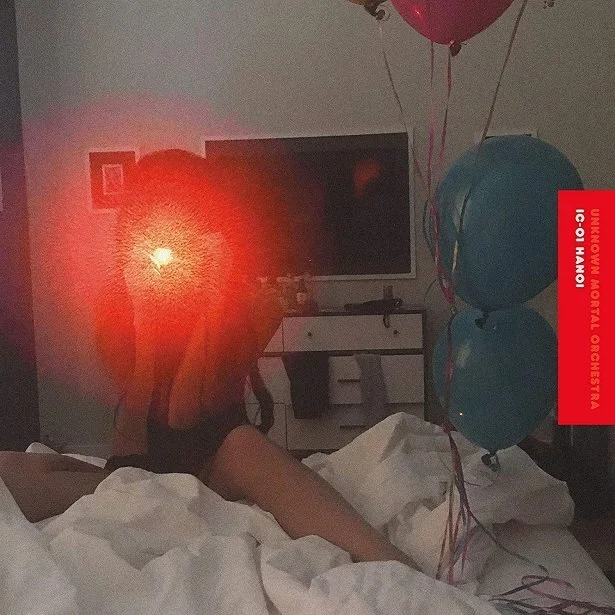
The sessions for Sex & Food, Unknown Mortal Orchestra’s fourth album, spanned much of the globe including stops in Portland, Seoul and Reykjavik as well as Ruban Nielson’s native Auckland. They also stopped off in Hanoi, capital of Vietnam.
One night, UMO regulars Nielson and Jacob Portrait were jamming (rather wonderfully with his father, brother and a local musician Minh Nguyen), and so this splendid surprise came to fruition.
Back on their self-titled debut album of 2011, UMO were lo-fi, guitar-driven psychedeliacs. But as their career has progressed, they have broadened their palette to incorporate 21st century R&B, soul and a wealth of other influences. The crisp snare drums and guitars that defined their sound seemed to fall by the wayside, but now they are back with a vengeance.
Opener ‘Hanoi 1’ (all tracks are numbered in sequence, which either makes things incredibly easy or difficult, depending on your point of view) opens with a bang, an explosion of chugging bass and frenetic Hendrix guitars. Sadly, at just over a minute, it’s over before it begins and we enter and then take a walk around the Kasbah that is ‘Hanoi 2’. The wah-wah peddle is used to maximum effect, and the track is a jam in the best way. It’s aimless, but that gives it the element of surprise.
‘Hanoi 3’ is Low-era Bowie (Side 2) in structure and atmosphere, using Lodger-era instrumentation. ‘Hanoi 4’, meanwhile, has a strutting beat, Nielson keeping the guitar simple but dominated by haunting atmospherics. Brass comes to the party on ‘Hanoi 5’, drizzling noir onto a tight piece held together by the snapping snare. It sounds like Amorphous Androgynous in a bad mood.
Most of the slices here are quite succinct, seven tracks comprising less than half an hour – all except ‘Hanoi 6’ which clocks in at nearly ten minutes. It’s a meandering sojourn, initially dominated by a didgeridoo (there’s really not enough of that around today), which is then usurped by all manner of effects and instruments, including some wonderful saxophone. A ten minute instrumental dominated by the sax has no right to be as enticing as this is. Lastly, closer ‘Hanoi 7’ grinds things down to a slightly drawn out conclusion, the guitar and bass getting one more run out.
If you hadn’t already gathered the, IC-01 Hanoi is an instrumental album. In fact, it’s hard to see it as anything more than a series of jams. Not utilising Nielson’s distinctive winsome vocals could be construed as a waste, but it offers everything else, including the kitchen sink, a moment in the spotlight. This is great music to fall asleep to, in that it encourages your sub-conscious to enter places and zones you don’t even know exist.
With IC-01 Hanoi and Sex & Food debuting within eight months of each other UMO are having their cake, but fortunately the listener gets to be the one to eat it.
The Coral - Live at SWX, Bristol
Scouse royalty The Coral have always existed in their own bubble, but since launching their label Skeleton Key they’ve expanded the membership of the club.
Support act for this autumn tour, She Drew The Gun, are one such example, and their powerful pop sustained attention during their short set. ‘Resister Reprise’ is a raucous belter while ‘Poem’ brought things to street level, singer Louisa Roach channelling her outrage through gritted teeth and a charming voice. Observational musings on the shortcomings of 21st century Britain, it echoes some of Jamie T’s more plaintive moments. Hardly ones to watch as they are now on their second album, but certainly ones to check out.
Once The Coral take to the stage, it’s full speed ahead. Opening with ‘Sweet Release’, James Skelly taking dual vocals with bassist Paul Duffy, it’s a pulsating start that then fed into the scuzz-psyche of ‘Chasing The Tail Of A Dream’. As most of the songs in their catalogue are succinct, it’s a bewildering assault on the senses as they rattle through the hits. Few corners of their canon were untouched, with only 2004’s Nightfreak & The Sons Of Becker and the ‘lost’ album The Curse Of Love unsurprisingly not represented.
Strangely, but hearteningly for a band that have been operating for over twenty years, the newer songs from this year’s ‘Move Through The Dawn’ got as good a reaction as the classics. As Skelly introduced each with ‘this one’s from our new album’, the crowd cheered so loudly that it was often hard to hear what the song actually was. Fortunately, ‘Stormbreaker’ itself didn’t suffer from the same problem; they probably heard the stomping back home in Hoylake.
Hugely underrated anyway, The Coral’s most unheralded attribute is how many beautiful songs they have written. ‘Pass It On’ has one of the most wistful yet catchy melodies one is likely to hear, ‘Jacqueline’ a melancholy tale and ‘Rebecca You’, which Skelly described on this nightas ‘one of my favourite songs of ours’ breaks the heart before haunting the head, with lead guitarist Paul Molloy expanding the song with an extended solo at the end.
Indeed, Molloy is now the band’s most potent weapon; when Distance Inbetween was released nearly three years ago it was notable for its slightly heavier sound, due to his inclusion, in a live environment Molloy takes things to the next level. Every song is beefed up, including their more acoustic offerings such as ‘In The Morning’, but it’s when he wigs out that he flies; ‘Holy Revelation’ has evolved into an absolute beast with its extended Hendrix outro, while the lead guitar on ‘1000 Years’ rips into the night. Elsewhere, the fable of ‘Bill McCai’ gallops as it always did, but with added muscle.
Molloy has the luxury of flying whilst the rest of the band are water-tight. Duffy is the heart of the band, engaging with the crowd (checking the day of the week, their head in the clouds as ever), while Ian Skelly on skins is the solid base, enabling his pals to orbit around him. Nick Power on keys brings the atmosphere that is so subtle but integral, especially on their cover of The Yardbird’s ‘Heart And Soul’. You don’t notice it often, but you certainly would if it wasn’t there.
They all got their moments to shine on the first song of the encore, ‘Goodbye’. Molloy and James had a wig-out each, Ian had an opportunity to show what he can do on drums while Duffy got a small solo. Of course, what followed next was truly Duffy’s moment; ‘Dreaming Of You’’s instantly recognisable bass intro bringing the house down, gone is the ramshackle whimsy.
This is a tight, cohesive rock band operating at the peak of their powers.
Richard Ashcroft - Natural Rebel

Don’t be fooled by the title, this is not rebellious music. As for natural? More and more so for Richard Ashcroft.
Over the course of his nearly 20-year solo career, Ashcroft has readily become a troubadour; as well as the handful of tracks The Verve produced that crossed over, the power of the band was in the sonic dreamscapes that the full complement of members concocted, the breakout tracks much safer and written by Ashcroft himself.
Taking that lead, his first solo album sustained a bit of pace, but each album became less and less compelling but no less listenable, until the career nadir of the United Nations Of Sound project, an album that, a few hip-hop beats aside, was so emotionally over-wrought as to become grating. That it was preceded by a powerful final (at time of writing) offering from The Verve highlighted a stark contrast.
And so Mad Richard disappeared for a few years, re-emerging in 2016 with the strong These People which added some house sprinkle to his universal musings. Since then he has been ubiquitous, most notably as Liam Gallagher’s soul partner in crime. Huge support slots in Manchester for Liam as well as Roger Waters (not to mention a ‘secret’ set at Finsbury Park), have only served to remind people of some of his astonishing songwriting achievements. He’s also running an hilarious PR campaign thanks to The Coral although, needless to say, he’s not taking mockery well.
So you would think he would play it safe from here, with anthemic acoustic indie-rock the order of the day. Not so. The key influence on Natural Rebel is Tom Petty (RIP), who was himself anthemic but with a more middle-of-the-road hue. It’s most notable on ‘All My Dreams’, a curious choice for an album opener, the subject matter being the love of his life Kate Radley, one can safely assume. More of the same follows on ‘Birds Fly’, which is a full-on string ballad with a twist. As ever, Ashcroft is going for timeless songwriting, always covering the big themes of love, life and pain – first single ‘Surprised By The Joy’ is as radio-friendly as he’s ever been; ‘I wanna walk the garden with you. A natural rebel, here I am’.
There follows a lot more in this vein, including ‘That’s How Strong’ and ‘We All Bleed’, with its gospel-Stones vibe. ‘I’m born to sing’ he asserts, and it’s undeniable that there is something about that tremendous baritone that keeps you involved. it’s specifically on the former where he flies. As is to be expected on the tenth album of his career, there are echoes to past work; ‘That’s When I Feel It’ harkens back to Keys To The World, and ‘A Man In Motion’ would sit comfortably on Human Conditions.
It’s a bottom-heavy album, with virtually all the pace in the second half; ‘Born To Be Strangers’ and the electrifying ‘Money Money’ add funk, gusto and rock to proceedings, the first an 80s New York strut, the second an out-and-out rocker, a fantastic Stooges-esque killer complete with riff and solo.
Richard Ashcroft has always been more mature than his years, the last of the great songwriters of that generation (Gallagher, Yorke, Albarn et al) to turn 50, and even that’s not for another three years.
If Natural Rebel is anything to go by, middle-age seems a good place to be.
Editors - Live at The Marble Factory, Bristol
Whilst in the queue for this rescheduled gig, I overheard a conversation between two punters in their early twenties: “Have you seen Editors before?” “Yeah, loads of times. They were my first gig when I was about 13.”
A stark (and depressing) reminder that the Birmingham crew have been going for some time now; while not yet veterans, they are certainly seasoned professionals and their showing here perfectly demonstrated that.
After two well-received received albums, Editors were on course to go ‘headliner status’ in the latter part of the last decade. Instead, they took a brave left turn and released the less accessible, industrial sounding third album In This Light And On This Evening which, although a cracking album, was probably a missed shot at their best chance to crossover. Fourth album The Weight Of Your Love was more radio-friendly but by then the ship had probably sailed.
Since then, they have released two further albums which have solidified their status as consistency kings. Live however, they’ve grown some serious chops. Opening with a left-field choice, ‘The Boxer’ from said third album, the quintet set their own slow but intense pace. As such, it took a while for things to get going before ‘All Sparks’ woke the crowd up for the first sing-along of the night. Predictably, the same followed for all their early stuff – of which there is a fair chunk – including ‘Someone Says’ and ‘Fall’ from their debut, as well as the singles.
As good as they are at festivals, Editors are more of an indoors band, their brand of dark rock all the better when the band are but silhouettes on the screen. As a frontman, Tom Smith has long mastered that sweet spot between Ian Curtis and Bono, and the rest of the band are seemingly happy to be left to their respective instruments whilst somehow still managing to look like students. Smith keeps the crowd interaction to a minimum, only thanking them and introducing the rest of the band at various points, letting his fine vocals speak for themselves.
The new songs from this year’s Violence mixed well with the older efforts, as did the two songs included from the previous album. Being newer numbers, they got a more muted reaction despite having had six months to bed into fans’ consciousness (but then it was a Monday). Regardless, there is enough quality there to bode well for the next tour when they are more established. This fact was brought into microcosm when the mighty ‘Papillon’ was followed by ‘Belong’, a slower new album track. It was a brave choice to do so, but it’s good to see they have faith in their newer material. Editors finished the main set with recent single Magazine, which like the rest of the album has a lightness of touch not worn since their second record but once again, its newness provoked a subdued response.
No such chances were taken for the encore, a closing trilogy of ‘The Racing Rats’, the incomparable ‘Smokers Outside The Hospital Doors’ and a blistering ‘Munich’ sending the crowd singing into the night.
Echo & The Bunnymen - The Stars, The Ocean & The Moon

Here’s an intriguing question: should art be left as it is, unaltered and unedited to stand the test of time? To be a moment in time or to disappear into the maelstrom?
Or should it be the artist’s prerogative to make any adjustments as and when they see fit? When George Lucas tried it, it was reviled. In music, the ‘rules’ are a little less clear but have largely had a muted response. Perhaps it’s because songs aren’t so immutable; any musician worth their salt will expand a song when they play it live, and who can blame them? Surely The Rolling Stones have every right to edit ‘(I Can’t Get No) Satisfaction’ as they see fit – they are the ones who have played it literally thousands of times after all, and will have to continue to play it until they drop.
Yet laying it down in the studio again is a different proposition. Notable attempts have come from Paul McCartney, who ironically stripped Let It Be of the more saccharine aspects of Phil Spector’s production, in doing so revealing it to be a long-term itch which Macca had to scratch, and an answer to the question was perhaps found when he proved to be the only one that was bothered.
U2 re-recorded certain tracks from the damp squib album Pop for a Best Of a few years later, and polished a few turds. So overall it takes a brave man to try this sort of thing, but then Ian McCulloch is nothing if not confident.
Actually, confident doesn’t do The Stars, The Ocean & The Moon justice; rather than tweak a specific album, or certain songs, he has ‘re-imagined’ the best known slices of the Echo & The Bunnymen catalogue, with two new offerings. In truth, these aren’t huge, wholesale changes so this album resembles a greatest hits. The songs themselves aren’t re-arranged, just added to with strings or keyboards. ‘Bring On The Dancing Horses’ loses a bit of life with less guitar emphasis and the dramatic harmonies, but a great song is a great song. ‘Lips Like Sugar’ puts the bass higher in the mix – justifiably as it carries the tune. ‘Angels & Devils’ features a new drum-beat which manages to sound new, but ‘Nothing Lasts Forever’ now sounds somewhat plodding.
One notable difference is McCulloch’s voice, which is more warm and textured having been through the rigours of time. It particularly adds a gravitas to the already sparse atmosphere of ‘Zimbo’. ‘Stars And Stars’ also benefits from more nuance, and ‘Seven Seas’ has been reworked as a John Cooper Clarke reading. Of the two new songs, ‘The Somnambulist’ stands out with its spirit lifting quality and sits comfortably with everything else here. ‘How Far?’, meanwhile, is ironically the most guitar-heavy track on the album.
Given their longevity, it would be churlish to begrudge Echo & The Bunnymen some self-indulgence. On quality of songs, The Stars, The Ocean & The Moon would be album of the year. Any album containing ‘The Cutter,’ ‘Lips Like Sugar’ and ‘The Killing Moon’ has to be.
Although the less said about this version of the latter, the better.
The Blinders - Columbia

Ladies and gentlemen, we have finally arrived.
As has been noted, we live in troubled times. At the very least, interesting times. Times that would seem ripe for documenting or acknowledging in art. Sadly rock music, specifically that from the UK, has been found wanting. The old guard have been negligent; this week Richard Ashcroft implored musicians to stop giving political speeches, it would be nice to hear from Primal Scream around about now and most disappointingly, despite having spent their entire careers being political, Manic Street Preachers have turned their back on such commentary. As for the class of 2003-6, they have proven what we always suspected: they haven’t got much to say. Arctic Monkeys are gazing at the stars and Franz Ferdinand continue to be beholden to the dancefloor.
In fairness, it’s not been for lack of trying. Slaves and Sleaford Mods have been operating on the periphery for some time, but this year the door has been well and truly kicked open. Shame are the oiks, Cabbage are the dramatists, Idles are the outraged and now we have The Blinders, the fablers.
Described as ‘an alternate world informed by reality’, Columbia lures the listener into its world from track one. The winding, almost Egyptian melody of ‘Gotta Get Through’ charms like a snake which wraps around your neck with a brutal chorus. ‘L’Etat C’est Moi’ (a Louis XIV quote translating to ‘I am the state’) puts frontman Johnny Dream (sadly a stage name) in the shoes of someone claiming to have ‘divine right’ as the band channel Humbug-era Arctic Monkeys around him. ‘Hate Song’, meanwhile, sounds like the riotous defiance of The Stooges while ‘they can’t have what you have’.
‘Where No Man Comes’ marches with foreboding doom, the march concluding with ‘Free The Slave’ which is putting you on notice for what follows. It sounds like it should be opening a Kasabian album, complete with war chant and seguing into ‘I Can’t Breathe Blues’ which ups the pace and is already one of their signature tracks. It’s all driven by Matt Neale’s powerful drumming, lifted straight from the John Bonham school of making the skins a lead instrument. It’s an immersive trilogy which is over in a matter of minutes.
Literary references are the album’s strength. Whilst it’s an obvious touchpoint, George Orwell’s seminal 1984 seems ever more prescient and ‘Ballad Of Winston Smith’ tells us a tale from Smith’s perspective, and with the slowest pace on the album it’s as close as we come to, well, a ballad. The pace is immediately picked up again with ‘Et Tu’, using metaphors in describing the fallout of the UK’s vote to leave the European Union and the headlines accompanying Boris Johnson during the days after. Brutus goes even further, noting ‘a celebration for a kangaroo nation’.
But Columbia doesn’t beat you over the head with its allegories. ‘Brave New World’ might not be about Trump’s America, it could be about an ‘idiot king building a wall’ (although the Kardashians reference makes it hard to avoid), and ‘Rat In A Cage’ doesn’t have to be about the migrant crisis, it could be a straight-forward call to arms, as ‘Dream’ tells us to ‘come together, we need each other’. The politics is there if you want it to be, but it’s oblique enough to ignore should you choose to.
The Blinders join Cabbage, Shame and Idles as pioneers of a movement we’ve needed for some time, giving us faith in rock music again. In 2018, punkadelia has finally caught fire.
Long may they be fanning the flames.
Pale Waves - My Mind Makes Noises

Isn’t this album already out?
It certainly feels like it’s been coming for a long time, but that’s probably testimony to the ripples Pale Waves have been making for a number of years now. Joint songwriters Ciara Doran and Heather Baron-Gracie first met at university in Manchester in late 2014 and after bringing kindred spirits Hugo and Charlie into the fold some time later, began uploading songs the following year.
Spotted the old-fashioned way (i.e. playing a gig), they were swiftly offered a slot on an XFM-sponsored showcase night which brought them to the attention of DJ John Kennedy. Eventually put in touch with Dirty Hit, the label behind The 1975 and Wolf Alice, they have since been building up a head of steam with some killer singles and EPs and, after being heavily tipped at the beginning of 2018 as ones to watch, the album is finally here. It’s fair to expect similar levels of success as their label-mates to come the goth popsters’ way.
You may have never known you wanted a mix of Taylor Swift and The Cure in your life but here it is, with added brutally honest lyrics. Starting with the stomping ‘Eighteen’, a paean to the rigours of being that age, the effects of love and the discombobulating effect it has on the hormones and the heart, Baron-Gracie puts all cards on the table from the off.
At times it borders on uncomfortable listening such is the insecurity evidenced here. ‘I feel pathetic in so many ways, how can you just stop loving me in a matter of days’ she laments on the gut-wrenching ‘She’, the centre-piece of the album. There’s no ambiguity, this is confronting variations of emotions that we’ve all had, but were so much rawer the first time experienced.
The 1975 frontman Matt Healy has co-produced some of the record, and it shows. Synth-driven tracks dominate proceedings with the vocals often double-tracked to add to the wistful ambience. It’s polished pop, but not to the extent that it blinds you – there is soul amongst the sheen. Meanwhile, the guitar solo on ‘Red’ comes straight from Dave Keuning’s locker. Indeed, The Killers are often evoked here; the dance-pop feverishness of Kiss echoes the pace and urgency that Hot Fuss was built upon.
The heartbreak goes further on final track ‘Karl (I Wonder What It’s Like To Die)’. Presumably to a family member, it’s a gut-wrenching ode. ‘Sometimes you cross my mind…that’s a lie, you’re on my mind all the time’. Otherwise, there’s not much deviation from the source material of affairs of the heart, but it’s well-ploughed turf for a reason, and in Pale Waves’ hands it’s never boring, in fact, rarely has it been so evocative.
This album makes you feel like you’re back in that golden/dreadful period between 17-22; for those in that age range in 2018, this is surely a record that will be held close to their hearts for the rest of their lives.
For the rest of us, we can just appreciate its lack of inhibitions.
Garbage - Live at Ashton Gate, Bristol
Rescheduled from a more central location which wasn’t ready in time, Bristol City’s football stadium played host to Garbage and support band The Horrors on a grey Friday night last week. Whilst not an obvious choice, it worked brilliantly as a venue.
Rather than taking place on the pitch, the gig instead took place in the foyer of one the main stands. Being an echo chamber, the sound was excellent and there was plenty of space for punters, equipment, merchandise stands and bars. If the closing of venues throughout the UK continues with such military precision, other football stadia around the country would do well to follow Ashton Gate’s example.
Resplendent in a shiny black leather jacket with trousers to match, at 6’4 Horrors frontman Faris Badwan immediately demanded attention as the Southenders took to the stage, but once the music commenced he had to compete. The Horrors have steadily built up an impressive setlist over their 12 years in operation; ‘Still Life’ sounds as positive and life-affirming as it ever has, ‘Who Can Say’ is all Mary Chain brutality and ‘Sea Within A Sea’, the platform on which their career was built (rightly, everyone now ignores the pantomime-goth of their debut), now has added muscle.
But it’s the newer songs from last year’s fine album V that stand out. ‘Machine’’s industrial thump batters the synapses, and ‘Ghost’’s slow build is genuinely chilling. However, nothing can compare to the glorious, ecstatic ‘Something To Remember Me By’, surely selected as set closer as nothing else could possibly follow it.
If anyone’s game to have a go though, it’s Shirley Manson. After a gentle easing in with soft B-sides ‘Afterglow’ and ‘Deadwood’, Garbage exploded into life with ‘Temptation Waits’. Even with the producer of Nevermind in the band, Garbage is very much Manson’s vehicle; she knows it herself, acknowledging the crowd with references to the last time they played Bristol, followed with ‘did you miss me?’, but that’s to no-one else’s chagrin. The woman is a born star.
She was vivacious and vibrant as she prowled the stage during ‘The World Is Not Enough’, confronted the crowd for ‘I Think I’m Paranoid’, quite literally under the spotlight for the entirety of the gig as the rest of the band operated in the shadows, but ‘twas ever thus. A good egg, she also showered The Horrors and fellow Scots Honeyblood with effervescent praise, and overall seemed genuinely pleased to be here.
Ostensibly to commemorate the 20th anniversary of second album Garbage 2.0, the set spanned B-sides and cover periods from that era as well as the aforementioned Bond theme. As such, there was no place for their anthems ‘Stupid Girl’ and ‘Only Happy When It Rains’, which was a shame, but there was ample replacement in the form of some well-chosen covers; Big Star’s ‘Thirteen’ and ‘Can’t Seem To Make You Mine’ by The Seeds. Snippets of ‘Personal Jesus’ and Fleetwood Mac’s ‘Dreams’ were bolted on to ‘Wicked Ways’ and ‘You Look So Fine’ respectively.
Before ending, as all gigs should, with a David Bowie cover (‘Starman’), Manson gave a speech about the uncertain world we live in, which is par for the course nowadays, but left with one crucial message: “We’ve been doing this for 25 years. Let me tell you, getting old is f***ing cool.”
If they can keep these blistering performances up, there’s no reason to doubt her.